
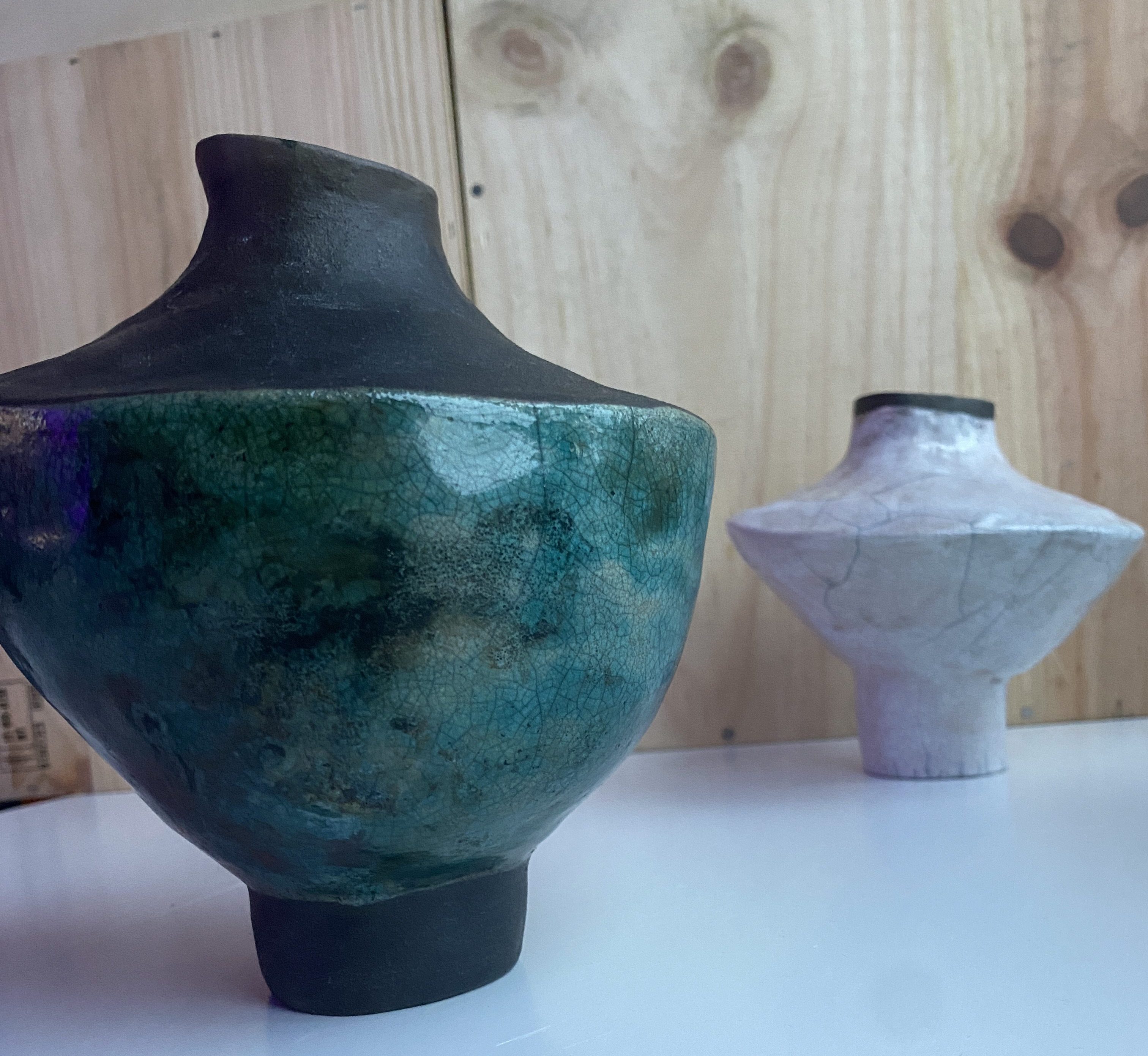
With its roots in 16th-century Japan, Raku pottery is an ancient technique of starving the clay piece of oxygen to create exceptional colours. This wonderful technique is best known for being incredibly unpredictable with totally unique results each time – and if you get it right, the results are often really special, and incredibly different to what you can get from a conventional kiln firing.
How is raku pottery made?
Before beginning a Raku firing, the clay is bisque fired first to strengthen the clay. Raku firing is a decorative technique so a standard bisque kiln firing is still required beforehand.
The pottery is then glazed and placed in a Raku kiln that’s already up to temperature – these can range from low cost options made from steel rubbish bins up to premium state-of-the-art kilns.
When I’ve taken part in the past, we’ve used a steel bin kiln and literally built a fire in the centre. Using tongs, gloves and other safety equipment, the pottery is placed in the fire for a few hours – it can take as little as fifteen minutes but it takes an experienced Raku potter to know by appearance when the pottery pieces are finished and ready to come out of the kiln.
The pieces are removed and placed straight into sawdust as they cool off. Even though the temperatures used are often much lower than a standard kiln firing, it’s the rapid firing and cooling process that is unique and creates the spectacular effects unique to Raku pottery.
What kind of clay is used for raku pottery?
Any clay that can withstand the shock of rapid heating and cooling can be used for Raku clay, stoneware clays in particular are a great option. Clays suitable for Raku should also have an open porous structure so it won’t vitrify at low temperatures.
You don’t need any special Raku glazes either, although testing will allow you to figure out which glazes work especially well so you can get an effect you love. You can even buy glazes that have been made with Raku firing projects in mind.
How to clean raku pottery
Due to its cracked and porous nature, Raku pottery is often fairly delicate compared to other types of ceramics – Raku is well known for its beauty but not its durability!
Gently clean Raku ceramics using soap, water and a cloth or sponge, and avoid the dishwasher. While Raku tea sets are still used in Japan in some tea ceremonies, it is not recommended that you eat or drink out of them due to the cracked nature of the clay and flaky glazes. Raku pottery is also best displayed away from windows and sunlight can dim the vibrant, iridescence colours that makes Raku pottery so spectacular.
Shop online
I am hoping to include some Raku ceramics in my pottery collection in the future. For now, if you are keen to see what it is I do please pop over to my Etsy shop and take a look at my work. Thanks for reading!